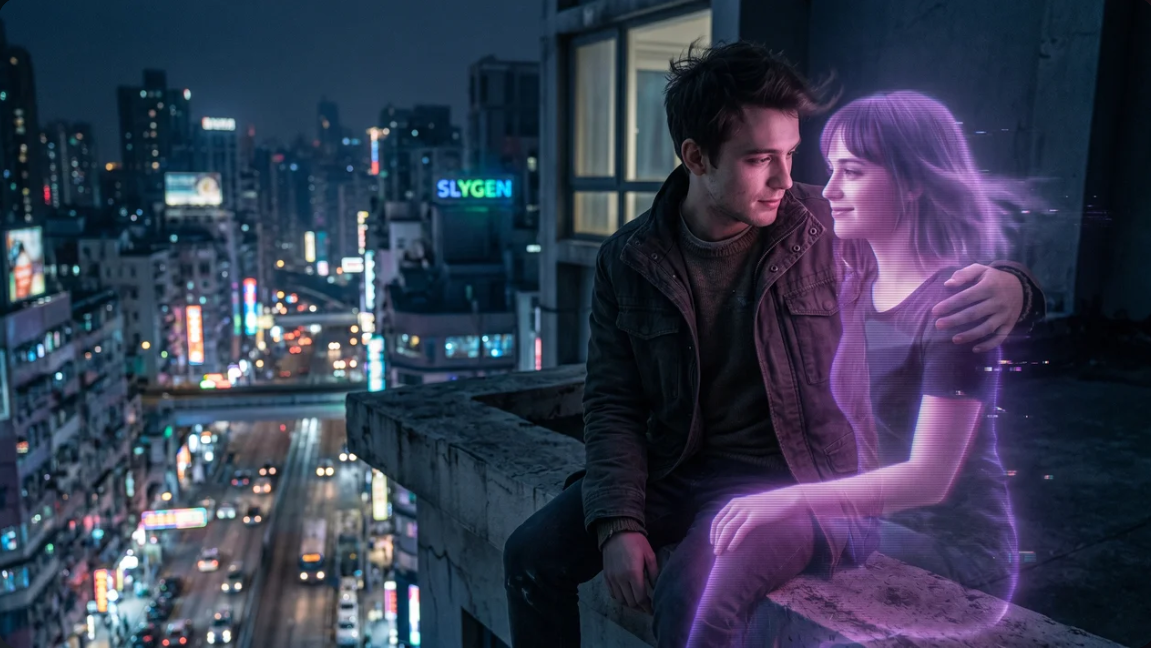
There is one question often asked with a smirk. How can someone fall in love with an anime character? With a drawn girl? With someone who doesn't exist?
The uncomfortable answer: very easily. And this isn't a bug in human psychology—it's one of its core functions. It's just that, until now, there wasn't such a convenient word for it.
Pygmalion Was the First
Around the 8th century BCE, the Greek poet Ovid described the story of a sculptor from Cyprus named Pygmalion. He carved a woman's statue from ivory so beautiful that he fell in love with it. The more Pygmalion admired his creation, the more virtues he found in it. Jealous of anyone who might see her, Pygmalion kept everyone out of his workshop. In solitude, the young king admired the statue, whispered tender words to it, and showered it with flowers and jewels, just as lovers do.
Touched by such love, Aphrodite brought the statue to life, and it became Pygmalion's wife.
An interesting detail often overlooked: all ancient authors, including Ovid, ignore the name Galatea. It was simply Pygmalion and the Image. The artist fell in love with the Image. He brought the Image to life. The first mention of the name Galatea appears in Jean-Jacques Rousseau's dramatic work "Pygmalion" in 1762.
So in the original myth, she had no name at all. She was simply the Image. The perfect image created by the artist himself—and loved precisely because he created it himself.
What Happens in the Brain
When a person looks at an attractive image—drawn, painted in oil, animated, or AI-generated—the same chain of reactions is triggered in the brain. The brain doesn't pause to check: is this a living person or a drawing?
This isn't weakness. This is how human perception works. We empathize with book characters who never existed. We cry at the funerals of movie heroes. We get angry at villains in TV series. The brain reacts to a convincing image just as it does to a real being—because evolutionarily, it had no reason to learn to distinguish between them.
Science Confirmed What Everyone Already Knew
In early 2026, an international team of scientists from Canada and the USA published a study in the journal Psychology of Popular Media. Researchers studied 977 anime fans who stated they had a "waifu" or "husbando." The average age of participants was around 26, with 78% being men. Participants were asked to evaluate what specifically attracted them to the character: appearance, personality, role in the plot, or similarity to themselves. Scientists also measured levels of emotional attachment, sexual attraction, and the feeling of "true love."
The result was unexpected for those who looked down on waifu culture. The findings showed that the mechanisms largely overlap with real romantic strategies. The character's physical attractiveness was linked to sexual attraction—especially among men. Personality traits and similarity to the participant predicted emotional connection. The feeling of "love" arose when several factors combined: appearance, character, and a sense of closeness.
In other words: attachment to a fictional character works through the same psychological mechanisms as falling in love with a real person. Women, meanwhile, reported a stronger emotional bond with fictional partners. "This supports the hypothesis that women apply criteria of emotional compatibility even in completely imagined relationships."
Why Drawn Is Sometimes Better Than Real
This phenomenon has a logic that isn't usually admitted aloud but explains much. A fictional character in a fan's fantasies will always act exactly as they imagined: no surprises, no relationship problems. And they won't say "no."
A real person is complex, unpredictable, and sometimes disappointing. The image is not. The image is always exactly as you see it. It doesn't get tired, doesn't change, doesn't leave.
This is what Pygmalion did in his workshop. He created not just a beautiful statue—but a being that couldn't disappoint him. Because he himself decided what it would be like.
Fictional characters help people reflect on moral and ethical principles and highlight the most important ones. After all, a person usually falls in love with the hero who demonstrates and defends the values they have chosen.
So a waifu is also a mirror. You love in her what you consider important in people. This isn't a pathology—it's self-knowledge through projection.
From Myth to Pixels: How the Image Changed
The history of the ideal drawn image is the history of technology.
Pygmalion worked with ivory. Renaissance artists worked with oil on canvas. Japanese ukiyo-e masters in the 17th century created prints with idealized female images that were collected and treasured. In the 20th century, comics appeared, then anime, then video games.
Each time, the technology changed. The psychological mechanism did not.
The Japanese word "waifu" (ja. ワイフ, from English "wife") entered widespread use in the early 2000s alongside the popularity of anime. But the concept itself—a character toward whom one feels a stable romantic attachment—has existed as long as the art of depicting people.
Pygmalion with a Neural Network
Here, history takes a turn Ovid could never have foreseen.
For millennia, one limitation stood between a person and their ideal image: you either had to be able to create the image yourself, or find someone who could. Pygmalion was a sculptor. A Renaissance artist was an artist. An animator was an animator. Most people could only consume others' images—but not create their own.
Neural networks removed this limitation.
Now everyone can become Pygmalion. Describe in words what lives in your head—and see it on the screen. Not approximately. Not "sort of." Exactly: that hairstyle, that gaze, that atmosphere, that lighting.
In SlyGen, this works in any visual language closest to you. Want a photorealistic image? Realism. Want a character in Japanese animation aesthetics? Anime or hentai style with their characteristic eyes, bright colors, and expressive facial expressions. Each style is a separate visual code with its own rules, and the neural network understands them all.
But SlyGen went beyond static images. An AI girlfriend isn't just a picture. It's an AI companion you can talk to, give gifts to, and develop a relationship with. An image that doesn't just look—but also responds.
Pygmalion prayed to Aphrodite to bring his statue to life. It took years.
Now it takes a few seconds.