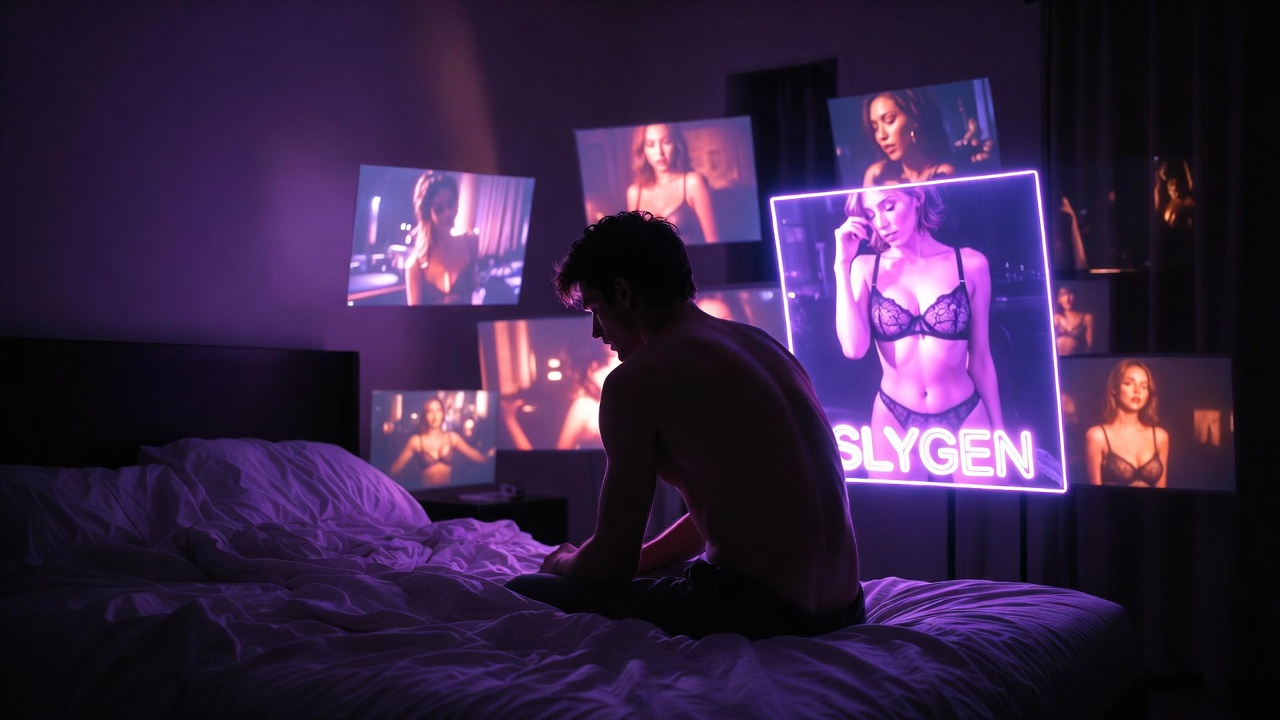
In 2026, visual neural networks have definitively moved beyond the realm of entertainment tools. They are used less for novelty and more as a means of state control through a personalized visual environment.
This is not about therapy or psychology as a discipline. Rather, it is about a new type of digital interaction where generating an image or video becomes a short closed loop: request → response → change in internal state.
Request as the Focal Point of Attention
The effect begins before the result is generated—at the moment the request is formulated. The user holds the image, refines parameters, and structures the intention. Against the backdrop of fragmented digital attention, this creates a rare state: a brief assembly of perception into a single line.
Effectively, attention shifts from a reactive mode to an anticipatory mode—with fewer random stimuli and a heightened sense of control.
Coincidence as a Stabilization Mechanism
The key moment occurs upon receiving the result. What matters is not how visually complex it is, but how much it aligns with the internal image. Even partial alignment triggers a recognition mechanism—confirmation of expectation.
At the experiential level, this provides: — a reduction in internal tension — a decrease in uncertainty — a brief boost in control
The effect is created not by the content, but by the alignment of intention and result.
Movement Enhances Engagement
Video amplifies this mechanism. Any movement transforms the scene from an object into a process. Attention narrows and locks onto a single visual stream, reducing competition from external stimuli. A brief state of cognitive immersion arises—maintaining attention within a single coordinate system.
Agency: The Key Shift
After the cycle completes, the main thing remains—the sense of participation. The user does not merely receive a result; they influence its formation.
This changes the role: from consumer to co-author.
A fundamental sense of agency forms—the connection between intention and the outcome of action. The modern digital environment is overloaded: notifications, short formats, constant switching. This destroys the sense of completed attention. Generative systems act as compensation for this deficit.
Their structure is simple: — a closed loop of "request → result → completion" — active user participation — concentration of attention in a single visual stream
This makes the experience more holistic compared to ordinary content consumption.
Generation as a Reflection of State
The nature of the request often reflects the user's current state. Under tension, it becomes more fragmented and impulsive. In calmness, it becomes more precise and structured. The system begins to function not only as a generator but also as an indirect reflection of the cognitive background.
Development Trajectory
The next stage is already visible:
— longer continuous scenes — real-time video generation — adaptation to user behavior — persistent characters with memory elements — personalization of perception dynamics
This is a transition from content generation to the formation of a personal visual environment. The change in 2026 is not a technological update, but a shift in the model of interaction with visual content.
From passive consumption to controlled creation. In an overloaded digital environment, generative systems begin to perform the function of cognitive stabilization through structure, predictability, and user participation. This is why AI video today should be viewed not as a new media format, but as a mechanism that changes the architecture of attention.