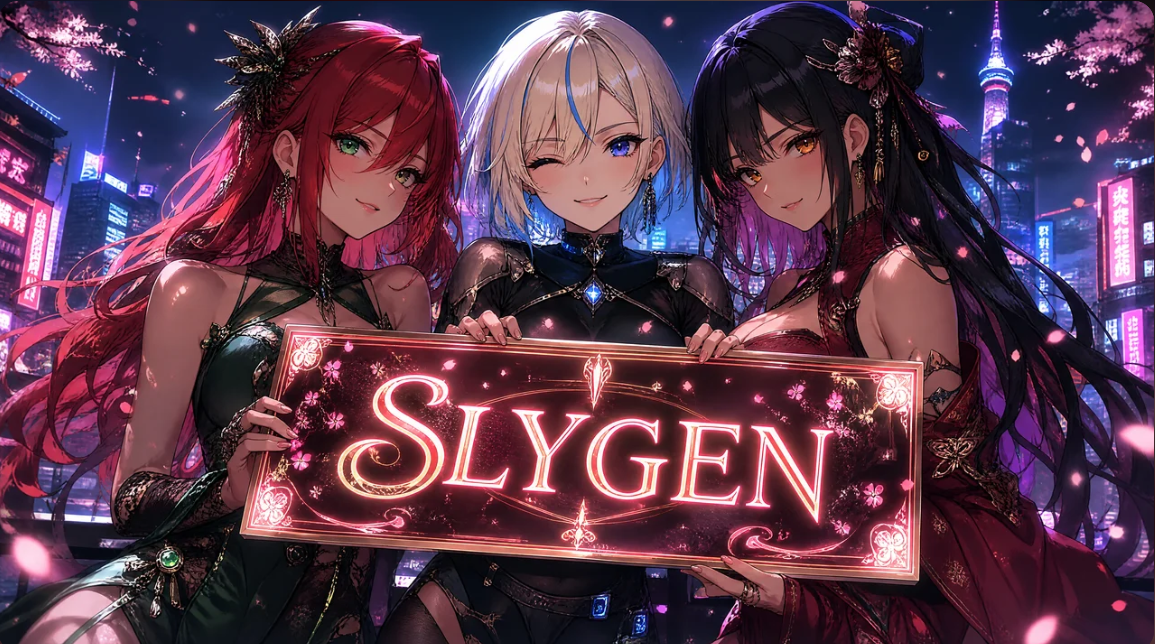
In recent years, anime image generation has become one of the fastest-growing niches in AI content. This is especially noticeable in the NSFW segment: stylized scenes in anime aesthetics are now generated by everyone—from artists and visual novel authors to ordinary users interested in personalized content.
However, a misconception persists around the technology, as if the neural network "draws everything itself." In practice, a good result almost always depends less on the model and more on how skillfully the prompt is constructed.
AI here acts more as a visual interpreter. And if the prompt is written chaotically, the scene will turn out chaotic too.
What exactly counts as NSFW anime generation
Usually, this refers to creating stylized 18+ images using text prompts or source images. Most modern models operate on the diffusion principle: the neural network gradually assembles an image from visual noise, refining scene details step by step. Unlike photorealistic models, the anime style handles visual conventions much better:
- exaggerated emotions;
- simplified anatomy;
- unusual proportions;
- hyper-stylized lighting and color.
This is precisely why anime generation usually appears more stable than photorealism. Models find it easier to maintain the integrity of such an image.
Why anime has become the primary style of AI generation
The reason lies not only in the popularity of the genre itself. Anime stylization has proven very convenient for generative models for several reasons:
- fewer requirements for physical realism;
- easier to maintain character consistency;
- artistic distortions look natural;
- emotions are read faster thanks to expressive facial features and color.
Moreover, anime aesthetics tolerate generation errors well. Where a minor issue in photorealism breaks the entire frame, in a stylized scene, it may appear as part of the drawing.
How generation actually works
The main mistake beginners make is perceiving the neural network as a human who "understands" the scene. The model doesn't see the image beforehand nor think in terms of composition. It simply matches words with the visual patterns it was trained on. Therefore, prompt structure is critical here. If the prompt simultaneously specifies:
- multiple actions;
- conflicting styles;
- a complex pose;
- an overloaded environment,
then the model will start getting confused about priorities. As a result, typical problems appear: strange anatomy, "floating" hands, broken lighting, or chaotic composition.
Why short prompts often work better than long ones
Many try to describe a scene as thoroughly as possible, adding dozens of characteristics at once. But a long prompt doesn't always mean a good result. In practice, neural networks respond better to a logical structure. Usually, a working scheme looks like this:
- Character;
- Action or pose;
- Composition;
- Lighting;
- Style and atmosphere.
For example, instead of an overloaded description, something like this works better:
- a girl with long red hair;
- a calm facial expression;
- full body;
- soft neon light;
- night city background;
- cinematic anime stylization. This way, the model understands more easily what is important in the scene.
Details that most strongly affect the result
There are several things that neural networks are particularly sensitive to:
- pose;
- angle;
- light source;
- facial expression;
- gaze direction. If these elements aren't specified, the model will start reconstructing them on its own. Sometimes successfully, but more often randomly. This is especially noticeable in complex scenes. Even a good prompt can "break" if too much movement or a non-standard composition is specified simultaneously.
Lighting matters more than it seems
Many focus on the character and hardly think about light. Yet it is often lighting that determines whether a scene looks cheap or atmospheric. Most commonly used are:
- soft diffused light for calm scenes;
- backlighting for volume;
- neon for night aesthetics;
- warm light for a more intimate atmosphere.
Moreover, AI reads such instructions quite well. Sometimes a single phrase about lighting changes the image more than ten descriptions of clothing or appearance.
Why almost no one gets a good result on the first try
Image generation is an iterative process. Almost all successful scenes are created through a series of edits. Users usually gradually refine:
- pose;
- emotion;
- style;
- composition;
- background;
- light intensity.
This is why experienced authors rarely try to write the "perfect prompt" immediately. It is much more effective to move from a simple scene to a more complex one.
Where users make mistakes most often
The most common problems usually look the same:
- too abstract a description;
- attempting to describe everything simultaneously;
- mixing several artistic styles;
- overloaded composition;
- overly complex pose.
Paradoxically, good prompts are almost always simpler than beginners think. Why AI generation is already a separate visual language Today, NSFW anime generation is gradually transforming from merely "creating pictures" into a distinct form of digital visual design. Here, the following are important:
- sense of composition;
- understanding of light;
- visual logic of the scene;
- working with frame rhythm;
- ability to maintain a unified style.
This is precisely why the best results are usually achieved not by those who know more tags, but by those who understand how an image is constructed in general. The neural network in this process remains a tool. And the quality of the scene still depends on the human who controls it.